How RunEconomy works
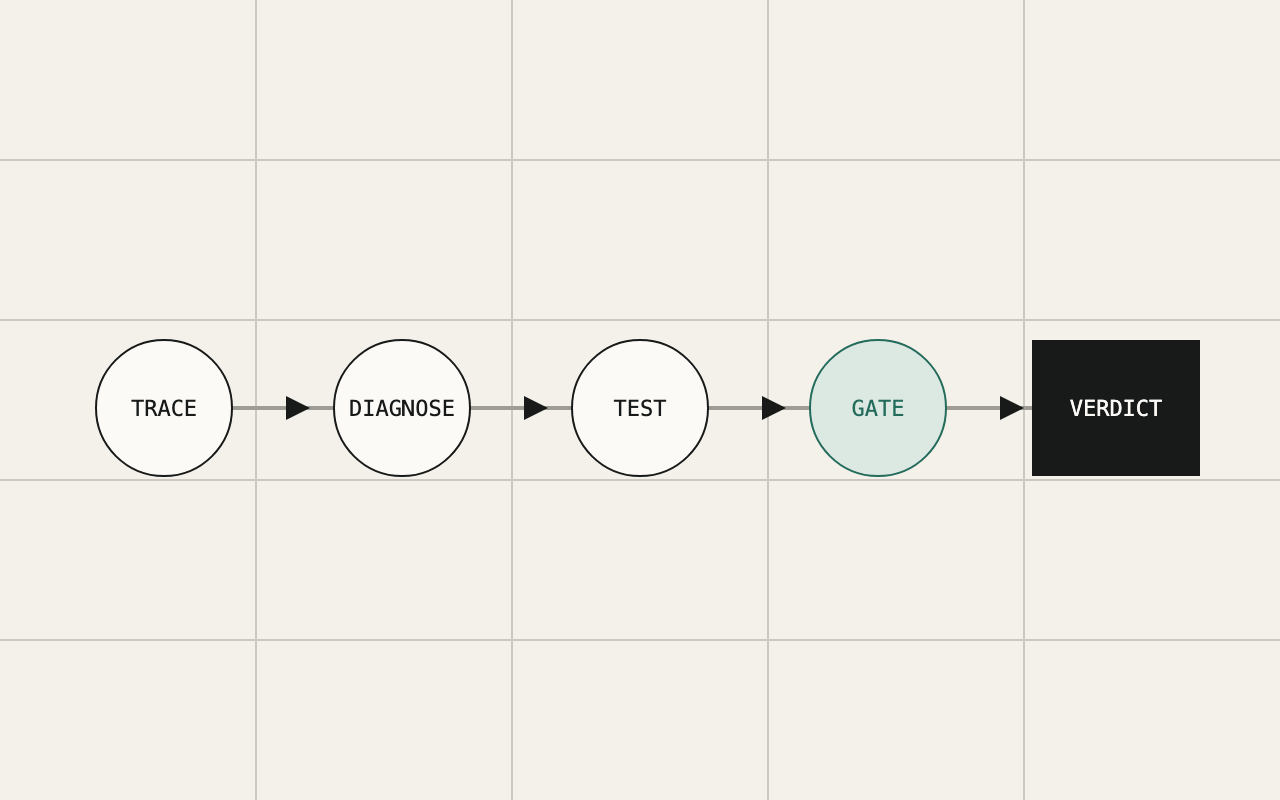
RunEconomy connects application behavior to inference measurements and refuses to verify a speedup unless task-quality evidence supports the comparison.
1. Import evidence
Use runeconomy import with OpenTelemetry or OpenInference, vLLM capture,
Prefixwise ledger, or Phoenix trace evidence. The resulting capability
assessment explains what is known and what remains unavailable.
2. Diagnose
Analyze repeated prompt prefixes and inference behavior in the context of the workflow. A finding records its evidence quality, affected requests, critical-path status, optimization target, required capabilities, and possible experiment template.
3. Initialize and validate
Turn a supported finding into a small experiment workspace. Validation reports whether it is runnable, unresolved, invalid, unsupported by the backend, or missing evidence for the intended claim.
4. Run and gate
Execute paired trials with frozen identities, ordering, metrics, task evaluators, and acceptance gates. Task success and completion are evaluated before successful-pair latency. Failures remain visible rather than disappearing from the latency sample.
5. Report the verdict
Return verified, regression, inconclusive, or invalid, together with the
decisive gate, provenance, intervals, and conditional mechanism measurements.
The result answers whether the proposed change improved successful-task
performance, not merely whether a cache counter moved.